Our Great Perhaps is reader-supported. When you buy something I recommend, I may get an affiliate commission, but it never affects your price or what I pick.
After living in Colorado for over six months, I’ve learned that packing for a ski trip here isn’t like packing for anywhere else. One morning you’re sweating under bright blue skies, and by the afternoon, you’re trudging through a snowstorm struggling to see three feet in front of you.
Whether you’re new to skiing, or a skiing expert who just wants a reminder so you don’t forget anything, this guide will help you be prepared… and in Colorado, being prepared makes all the difference between an epic ski day and one that has you wondering if you ever want to do it again.
If you’re new to skiing in Colorado, make sure to check out what to know before visiting Colorado for a ski trip. It’ll help you get a bit more familiar with everything from altitude to weather to local tips. Once you’ve got that down, it’s time to focus on the fun part: figuring out what to wear (and bring).
After countless snowy weekends, some weirdly hot days, and many packing mistakes of my own, here’s my complete guide to packing for a Colorado ski trip like a pro… from the slopes to the town and the après in between.
The ski trip essentials you’ll actually use
As someone who has done a lot of night skiing (especially when I did night-time ski races), having warm gear was a make it or lose a finger situation. As a result, I have tested tons of gear to see what works, even on the coldest days. Here’s what I came up with:
Gloves that actually keep your fingers warm
The first thing you’ll learn skiing in Colorado? Fingered, regular gloves probably won’t cut it. You’ll want waterproof gloves or mittens (mittens are usually warmer).
The best way to stay warm on blizzard days is with a pair of these heated gloves. I wish I had them during my old racing days, because they have become a staple for skiing in Colorado.
Off the slopes, or under your gloves, touchscreen-compatible gloves are another essential for my Colorado ski trips. There’s nothing worse than needing to text or snap a photo and having to expose your fingers to the air in 10°F weather.
REI makes my favorite kind, with wool so it’s sweat wicking which is super important to keep you warm. You can get yourself a good pair of them here.
Keep your head warm on and off the slopes
Bring at least a couple of hats, or more if you want some variety. When it comes to skiing, I tend to wear the same one, but if you sweat a lot, you might want a few pairs.
You’ll need a hat thin enough to fit under your helmet (or more than one), and you’ll probably want another cozy one for walking around town.
You also should make sure that your under-helmet hat is moisture-wicking. For that reason, I’ll always recommend a good wool one. SmartWool is usually my go-to (for socks, hats, etc.), so I’d recommend this hat to keep you warm and dry.
For in town, I’m a bit obsessed with the ribbed hat look, so if that’s your style too, here’s my favorite. This one works on and off the slopes, but it isn’t quite as moisture wicking as wool.
Some people prefer balaclavas like this, but it really depends on your style. I usually opt for a neck warmer instead, or a bandana so it’s super breathable. Keep in mind that a bandana or the really soft, fuzzy neck warmers can get really gross if you have a sensitive nose like me.
A quality ski jacket makes all the difference
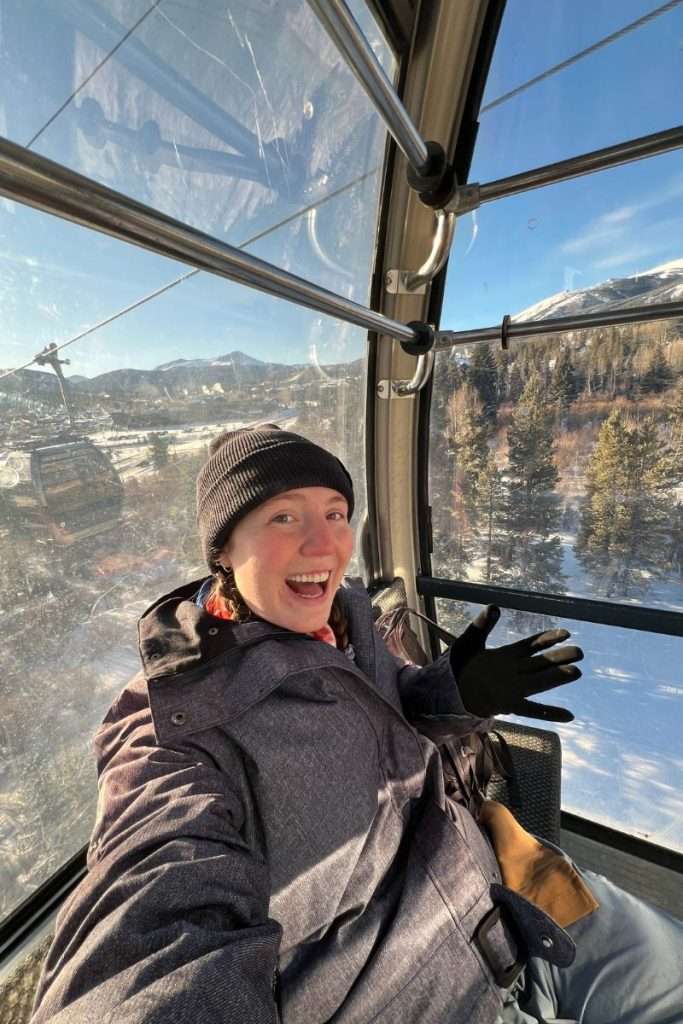
A good ski jacket is well worth the money, but sometimes it can be hard to tell the difference between a jacket that is expensive and good or just straight up expensive. I didn’t realize how much difference a quality jacket made until I finally invested in one that was truly waterproof and insulated.
It’s nice to choose to take a break from skiing because you’re actually tired, not because you’re frozen. When it comes to a good jacket, you’ll need a powder skirt, pit zips, and plenty of pockets. Trust me, you’ll use them all.
If you’re looking for a ski jacket that is the best value, REI’s Powerbound jacket is a great overall pick. If you are alright with a bit more of a splurge, Patagonia’s insulated jacket is a bit of a better option for longevity and warmth.
Don’t forget about snow pants!
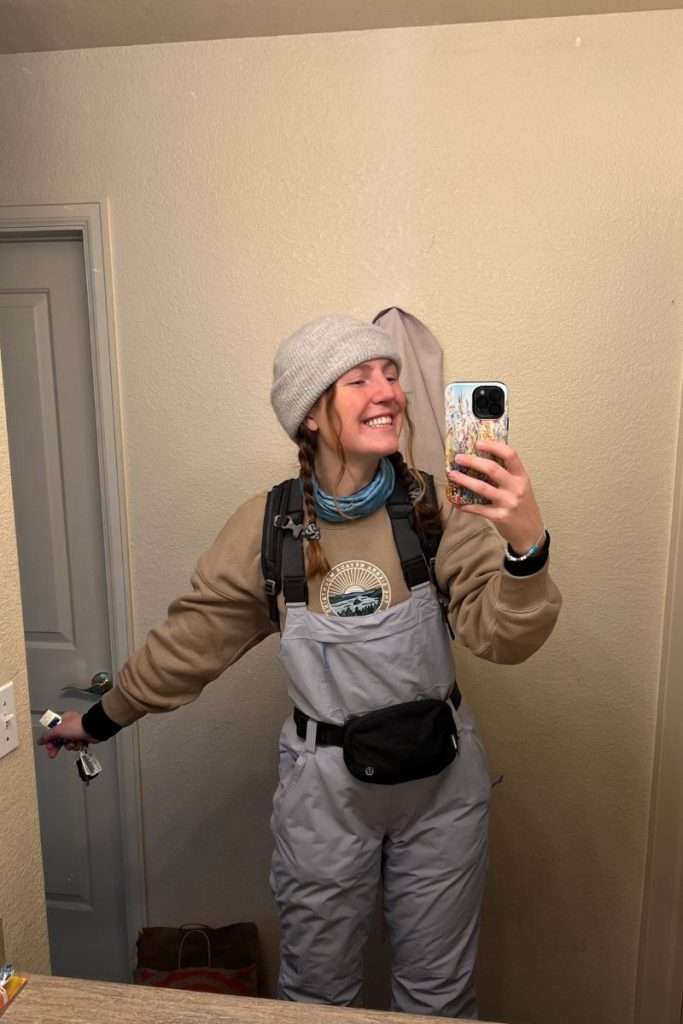
I don’t buy new gear often, but I finally upgraded my snow pants last year and I’m so glad I did! I found a great bib at REI. If you aren’t familiar, bibs are like overalls but for snow pants. I prefer them since they stay up better, but it can be hard to find ones that fit properly, especially for women.
This is the bib that kept me warm (pictured), it fits over my snow boots so I didn’t have to worry about snow, and the front pocket was super convenient.
Plus, it comes in cute colors and fits my hips and legs really well without much bulk or tight squeezes, which I can rarely find.
Don’t forget to choose a size a little bigger than you would need since you want to have the option to include as many base layers underneath as necessary.
Base layers are everything
Good base layers will make or break your trip
Base layers keep you warm without overheating, and I’ve learned the hard way that there are right and wrong choices for this one. My go-to brand is Under Armour, which I’ve been loyal to for over 20 years of hitting the slopes.
All of their base layer gear is great since they’re comfy, breathable, and they dry quickly so you won’t freeze from your own sweat.
For a week or longer, I would bring at least 2-3 sets. That might sound like overkill, but after a long ski day, base layers can get sweaty (and smelly). Plus, having extras means you’ll always have a clean, dry set ready for the next morning. If you don’t have a washer or don’t want to plan your day around a load of laundry, that’s important to consider.
Enjoying this post?
Join Liz Long and Prosper for bi-monthly travel tips, destination guides, freebies, and my free 25-page guide to saving money on travel.
Don’t forget a good sweatshirt too (crewneck, not hoodie), so you can have extra heat on top. Sometimes I’ll even double up on my Under Armour layers for cold days. Forgetting a base layer changes my entire skiing experience.
Socks, but thick DOESN’T mean warmer
Ski socks are one of the most underrated parts of your gear. People, especially new skiers, think that thick socks are the best choice to stay warm… but it’s actually the opposite. Thick socks not only make your boots fit tighter, but they actually make your feet colder because the sweat freezes inside.
That’s why you should opt for thin, wool, moisture-wicking socks, not thick cotton ones. You also need to make sure that they are over the calf socks (OTC), and referred to as ski socks specifically because even a difference of where the seam is can end up causing you a lot of unnecessary pain on the slopes.
My favorite pair is SmartWool ski socks, since they are a reliable brand and always keep my feet warm (plus they have fun designs!). Bring a few extra pairs; your future self will thank you when they realize yours are standing up on their own after just one day of skiing.
Don’t forget your ski goggles
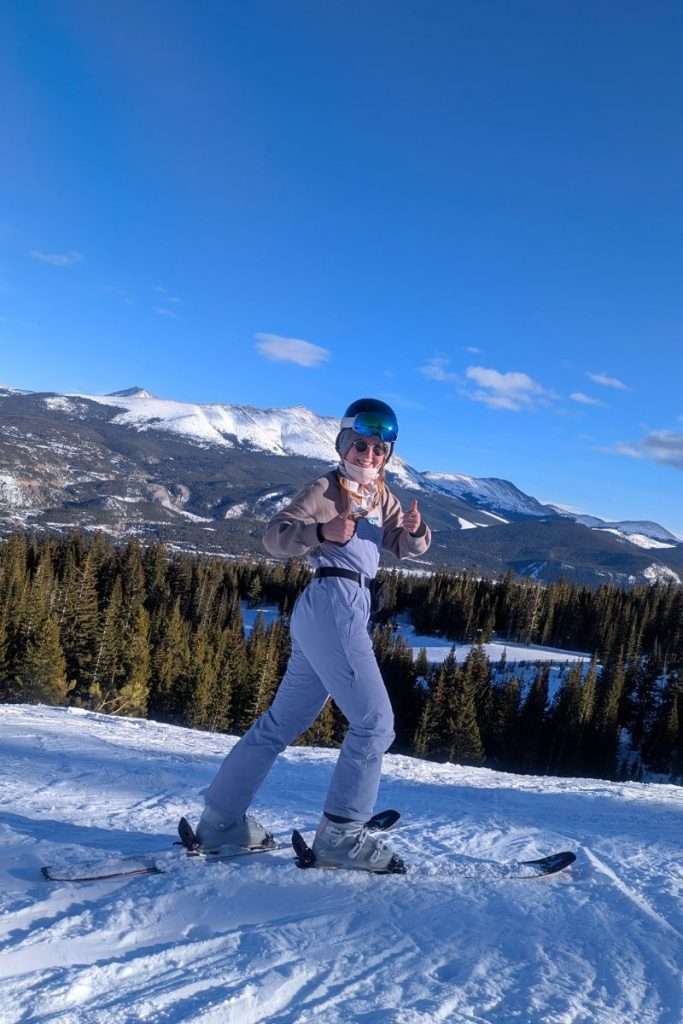
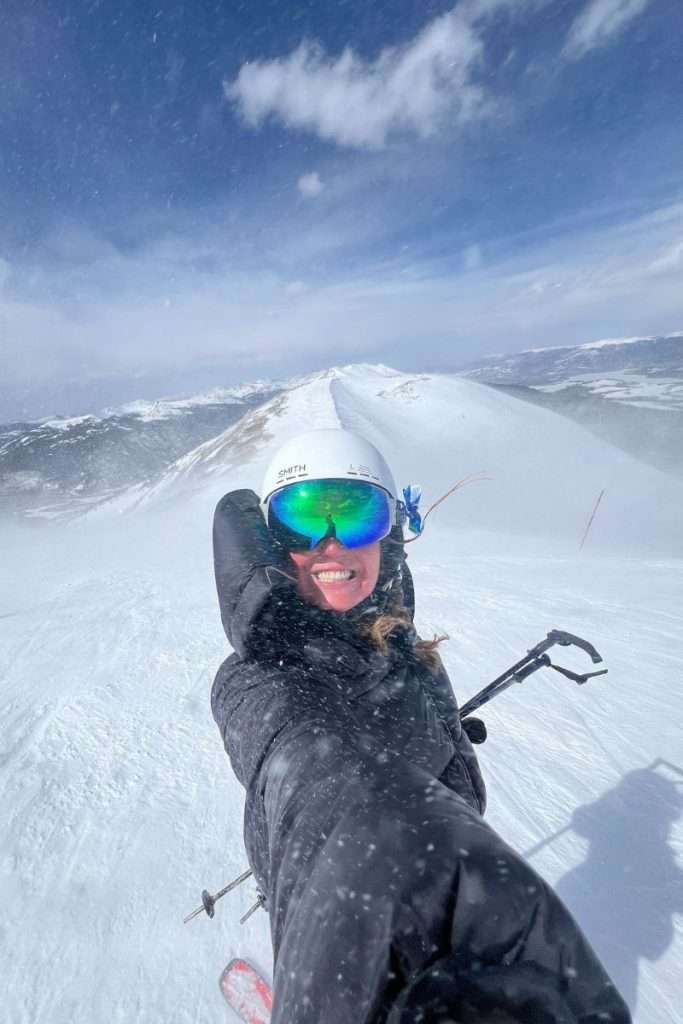
One of the most frustrating items to forget: your ski goggles. Ski goggles or sunglasses protect your eyes from glare, and goggles especially keep your face much warmer. Plus eye protection is necessary for seeing when the wind or snow is in your eyes.
Get a pair of goggles with replaceable lenses so you can see in different lights (you don’t want 70% when it’s dark at night or during a storm). Different lens options have been a game-changer for my ski days, since visibility is one of the most important things.
I have been using OutdoorMaster (pictured!) for the past few years. They work great for a very competitive price.
Off-the-slopes: What to wear around town
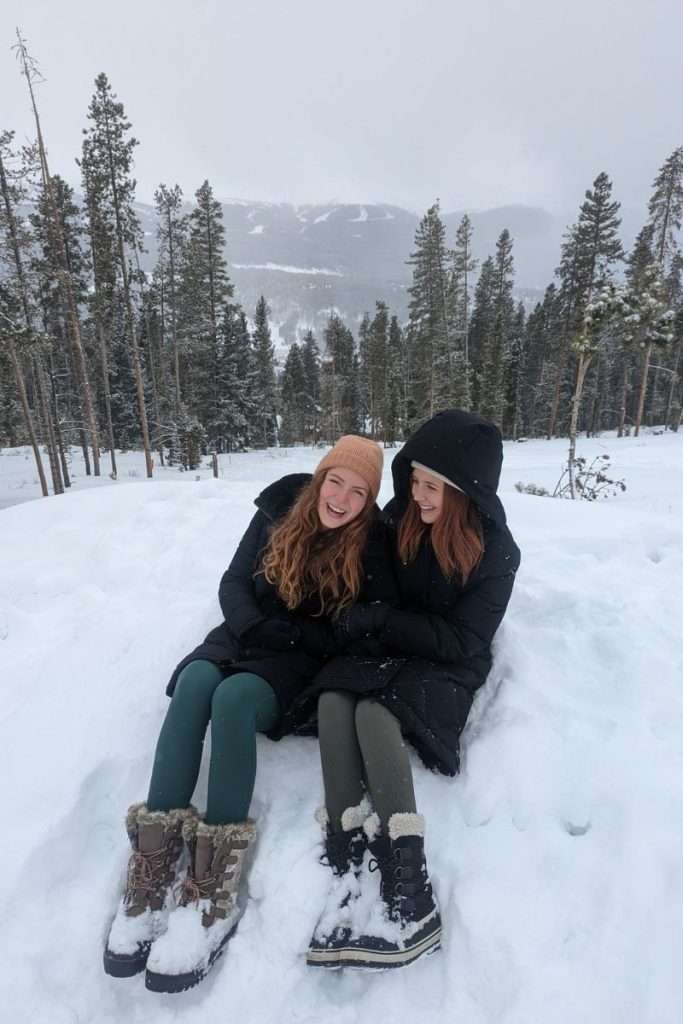
Boots that can handle snow and ice
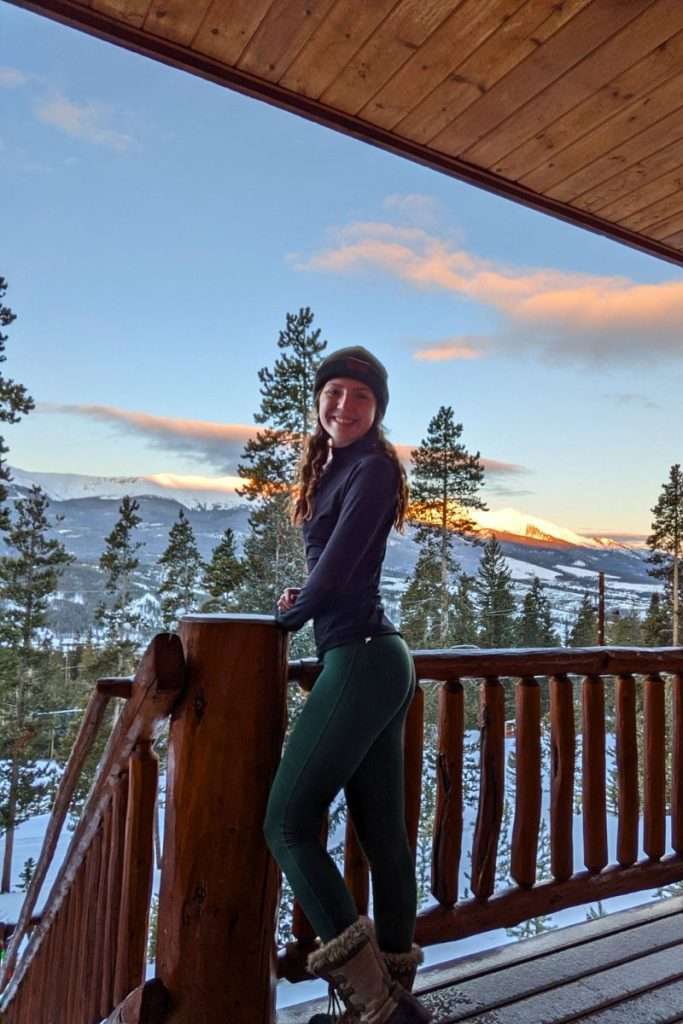
If you plan to walk around ski towns like Breckenridge or Vail, a good pair of boots is essential. I personally love my Vessi high top snow boots, since they are incredibly warm and my socks always stay dry in them… plus they’re lightweight and cute.
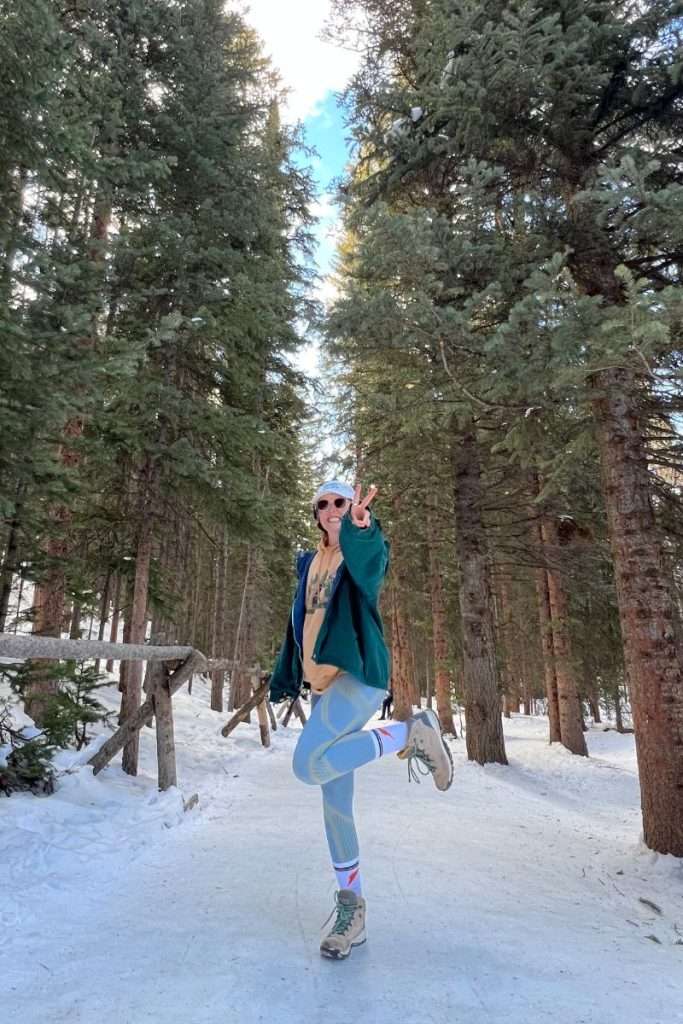
But honestly? The shoes I wore almost every day were my hiking boots. I’ve had this pair of Columbia hiking boots for a VERY long time, and they have seriously passed the durability test. If you want to grab them on Amazon, you can find them here.
They are also incredible for ice, easy to layer with thick socks, and comfortable for walking around after a long ski day.
Oh and I can’t forget to mention my favorite going out boots while I was there as well. These boots did a GREAT job. In spite of the icy sidewalks, I never fell when I walked around in these. Plus they’re super cute. You can grab a pair for yourself here!
Yaktrax for icy trails
If you’re visiting anywhere with steep or icy sidewalks, Yaktrax are a lifesaver. They are super easy to use, just slip them over your boots and you’ll get extra traction on ice. They work great for morning coffee walks or if you plan to do any winter hiking.
Cozy layers for exploring
Don’t forget your apres-ski gear:
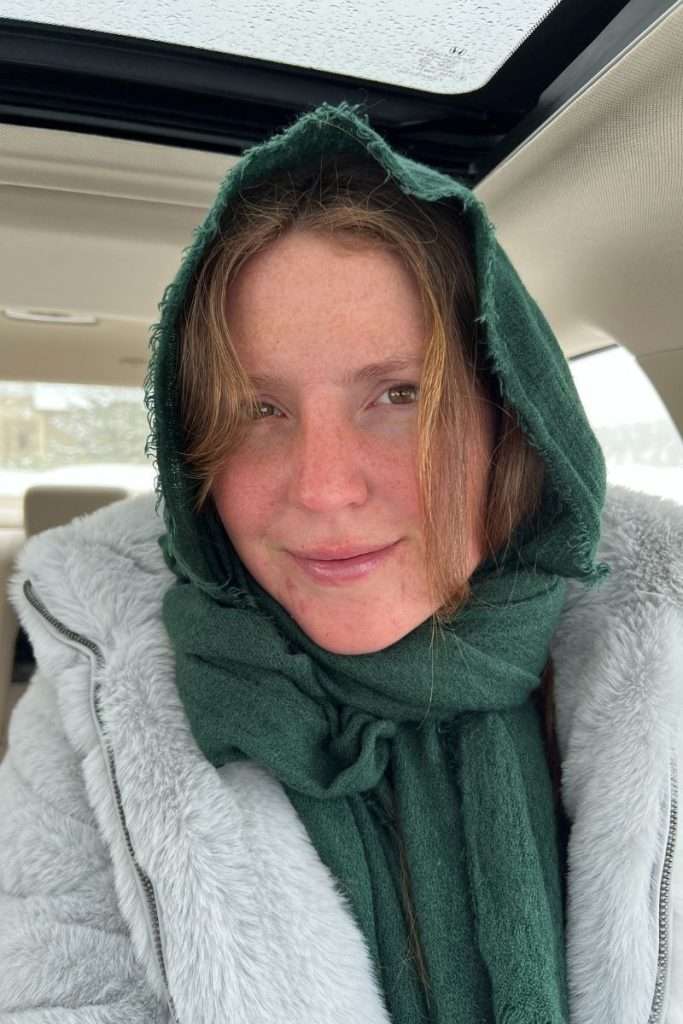
A warm scarf (I love one that doubles as a hood or hat, like the one pictured)
Gloves with touchscreen fingertips
Fleece or down jacket for layering
Comfy jeans and leggings you can wear to dinner or drinks
Colorado mountain towns are casual, you’ll fit right in wearing practical but warm layers.
Non-clothing essentials for your Colorado ski trip
These little things make a huge difference in comfort:
Lip balm with SPF: After years of searching, I finally found one without petroleum in it!
Sunscreen: Even in winter, the sun reflects off the snow and burns fast, especially when you’re so high up in Colorado. I have sworn by SuperGoop for 3 years (and the tube still hasn’t gone empty with daily use).
Squishy water bottle: After 23 years of skiing, I finally learned about these water bottles that fit in your pocket… my ski day hydration will never be the same.
Portable charger: The cold drains phone batteries ridiculously fast, and you’re going to want a charger that keeps up.
Snacks: Trail mix, energy bars, or even gummy bears for the lifts. I’d recommend some electrolytes too if you want to cover all your bases.
Bonus items to consider
Reusable tote for hauling gear.
Small first-aid kit for blisters or scrapes.
Lightweight backpack or fanny pack because pockets usually aren’t enough.
Swimsuit for that inevitable hot tub moment!
Extra socks and base layers because Colorado snow melts everywhere.
Packing tips from a Colorado local (well, almost)
After living in Colorado for half a year, the biggest lesson I learned is that layers are essential. The weather can change dramatically throughout the day, and as soon as one thing gets wet, it’s game over.
Skip bulky sweaters; opt for thinner fabrics on the mountain.
Avoid cotton (it soaks up moisture and takes forever to dry).
Pack a few laundry pods if you’ll be staying more than a week, washing base layers mid-trip is a lifesaver.
If you’re still deciding where to go, check out my guide to which Epic Pass resort to visit in Colorado, it breaks down which mountains are best for beginners, experts, and everyone in between.
Final thoughtson packing for a Colorado ski trip
Packing for a ski trip in Colorado doesn’t have to be complicated, you just need to know what works. After living there for over six months, and visiting multiple times, I can confidently say these are the things you’ll actually use, both on and off the slopes.
I use cookies to improve your experience and understand how people use the site. By clicking "Accept", you agree to this. You can learn more in my Cookie Policy.